
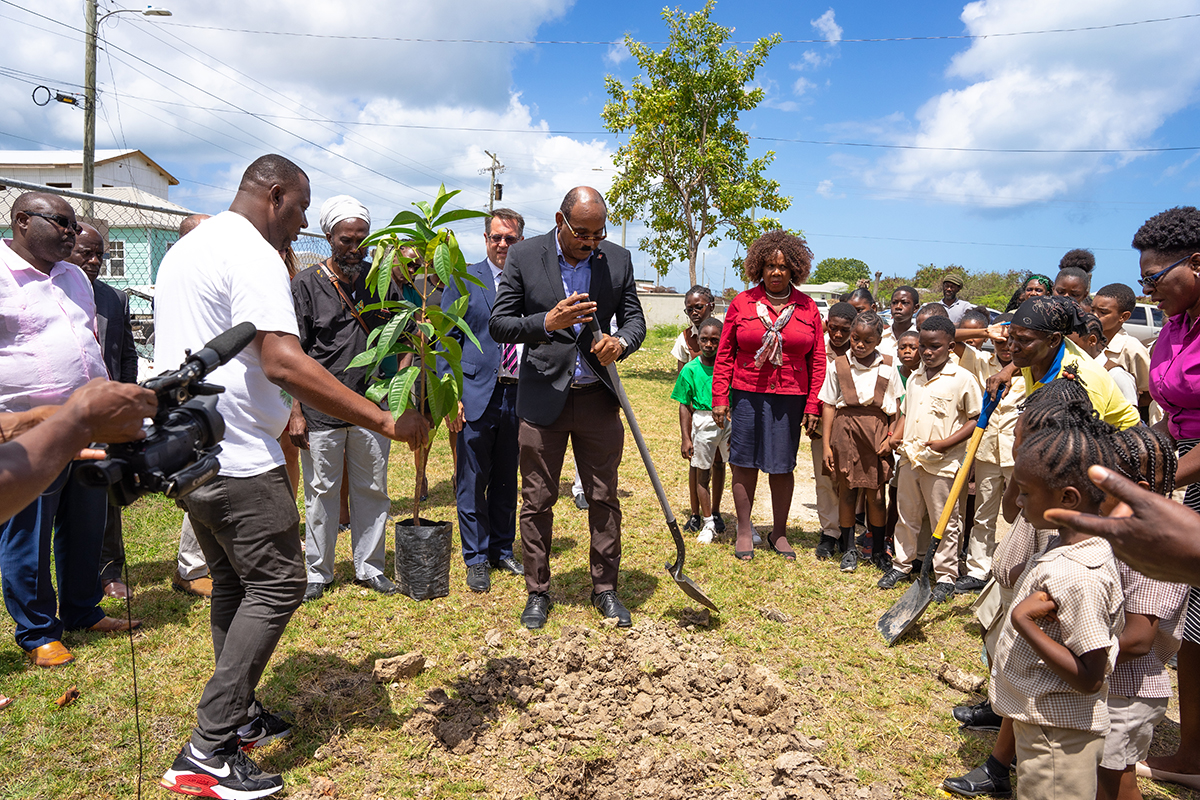
Access to playgrounds and other outdoor areas on a school campus is as important to supporting learning as traditional classrooms. With careful planning, schools can make effective use of these communal spaces to help create the right school culture and support learning beyond the classroom.
The COVID-19 pandemic has proven the value of these spaces in supporting high-quality teaching and learning. As schools have tried to spread students out to maintain safe social distancing, many have taken advantage of outdoor areas to create additional learning spaces. Outdoor learning spaces can be an easy and cheaper way to offer better air quality, as well as a way to increase school capacity.
Outdoor spaces offer several opportunities to extend learning, and research suggests there are both educational and health-related benefits to learning outdoors. For instance, breathing fresh air can clear students’ minds and help them think by increasing the amount of oxygen their brains receive. Being outside can also reduce stress and improve students’ emotional well-being. Studies have linked outdoor learning to reduced stress, greater visual-motor integration, stronger verbal and social skills, increased attention and cognitive abilities, more enjoyment of school, and longer retention of information.
Objectives & Outcomes
The overall objective of this programme is to develop an outdoor learning space to encourage opportunities for increased active engagement of students in a natural learning environment.
The outcomes at the end of this programme are:
· Improved learning and health outcomes for children.
· Use of an alternative space to the traditional classroom setting especially during the COVID-19 pandemic.
The programme contributes to the achievement of SDG 3 – Good Health and Wellbeing and SDG 4 – Quality Education.
Learning Spaces
Each outdoor learning space supports experiential learning enabling students to independently explore, and interact with various natural phenomena, other beings, and themselves. The design of each outdoor learning space aligns with the learning priorities of the individual school and following discussion amongst the EU Delegation, the Office of the National Authorising Officer, the Ministry of Education, and School Leaders. Wherever possible, outdoor learning spaces have access to the school’s WiFi to allow for a seamless transition between indoor and outdoor learning. In some cases, the learning space on the school campus may also be accessible to members of the community. For example, two of the schools in Barbados are co-located with a church.
Resources
The various outdoor learning spaces have a combination of benches, bins, learning boards, and multilingual signage. Learning spaces at the secondary level may also have access to solar robotics kits and demonstration solar panels.
PICNIC-STYLE BENCHES
The placement of the sturdy, rustproof, waterproof benches ensures that students are engaged in dynamic multi-sensory learning while enjoying the fresh Caribbean outdoors.
BINS
The authentic Caribbean artistic designs include messages to students of the importance of reading. Schools are encouraged to use the bins exclusively for recycling.
LEARNING BOARDS
The weatherproof learning boards provide aunique and interactive way of learning or reinforcing key concepts to student based on the learning priorities of the school.
ROBOTICS KITS
The easily assembled and convertible, lightweight educational solar powered robot kits introduce students to robotics, motors, and renewable energy.
SIGNAGE
Presented in three languages – English, Spanish, and French – the signs provide an immersive opportunity for second language acquisition.
Schools
BARBADOS
In early 2021, students began benefiting from outdoor learning spaces on six school – 5 primary and 1 secondary – campuses in Barbados within the immediate community of the EU Delegation:
· St. Ambrose Primary
· St. Lawrence Primary
· Arthur Smith Primary
· Bay Primary
· Seventh Day Adventist Primary
· Graydon Sealy Secondary
Additional schools will come on board in other areas of the country in coming years.

